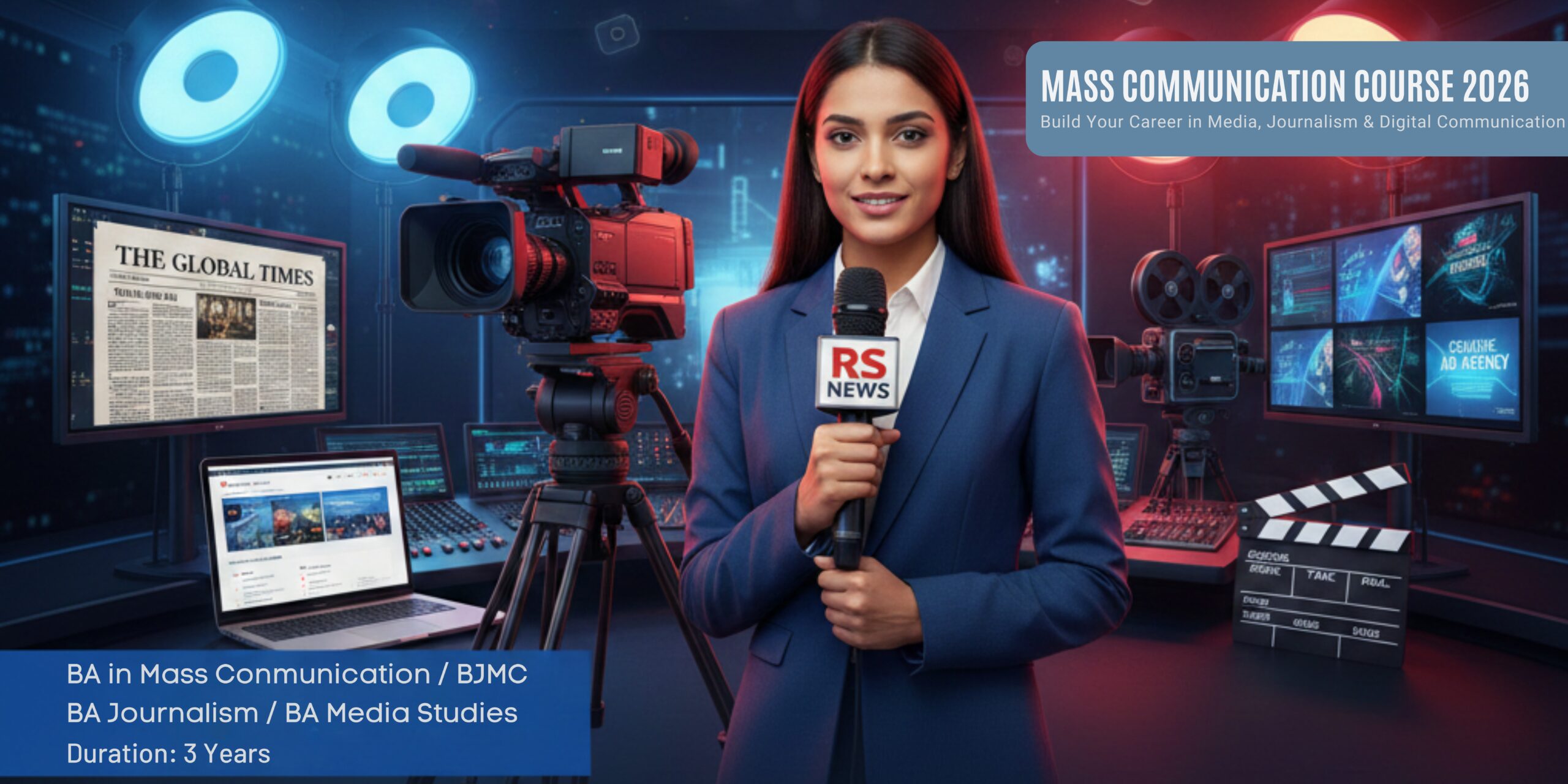
Are you planning to build a successful career in media, journalism, or digital communication?
The Mass Communication course 2026 offers exciting opportunities for students interested in working in television, news media, advertising, public relations, filmmaking, and digital platforms. This detailed guide covers eligibility criteria, entrance exams, syllabus structure, admission process, career scope, and top colleges in India.
At RS Education Consultancy, we provide expert guidance to help students secure admission in reputed universities offering Journalism and Media Studies programs.
What is Mass Communication?
Mass Communication is a professional academic field that focuses on creating and delivering information to a large audience through various communication channels. These include:
● Television & Broadcasting
● Newspapers & Journalism
● Digital Media & Social Media
● Advertising & Brand Communication
● Public Relations
● Film & Video Production
A degree in this field builds strong communication, presentation, research, and creative skills required in today’s fast-growing media industry.
Mass Communication Courses in India
Students can pursue undergraduate or postgraduate programs depending on their qualifications.
Undergraduate Programs (After Class 12)
● BA in Mass Communication
● BJMC (Bachelor of Journalism and Mass Communication)
● BA Journalism
● BA in Media Studies
Duration: 3 Years
These programs focus on foundational media knowledge along with practical exposure.
Postgraduate Programs (After Graduation)
● MA in Mass Communication
● MA in Journalism
● MJMC
● PG Diploma in Media & Communication
Duration: 2 Years
Postgraduate courses provide advanced training in reporting, media research, digital strategy, and production.
Eligibility Criteria
For Undergraduate Courses:
● Must have completed Class 12 from a recognised board
● Minimum percentage requirement as per university norms
● Some institutions require entrance exams
For Postgraduate Courses:
● A graduation in any discipline
● Required minimum marks
● Entrance exam or merit-based selection
Students should always verify university-specific eligibility before submitting the application form
Entrance Exams for Mass Communication 2026
Admission to top universities may be based on:
● CUET (for central universities)
● University-level entrance tests
● Direct merit-based admission
Selecting the correct admission route improves the chances of securing a seat in a reputed
institution
Mass Communication Syllabus & Course Structure
The syllabus is designed to combine theory with practical exposure. Major subjects include:
● Reporting & News Writing
● Editing Techniques
● Media Ethics and Communication Laws
● Advertising & Brand Management
● Public Relations
● Digital & Social Media Marketing
● Photography & Video Production
● Film Studies
● Media Research Methods
Internships, workshops, and live projects are often part of the curriculum to build industry experience
Admission Process 2026
The mass communication admission process includes:
1. Filling the online application form
2. Appearing for the entrance exam (if applicable)
3. Merit list declaration
4. Personal interview or counselling round
5. Document verification
6. Fee submission and final admission confirmation
Proper planning helps students avoid errors during the admission process.
Documents Required
Students should keep the following documents ready:
● Class 10 Marksheet
● Class 12 Marksheet
● Graduation Marksheet (for PG)
● Passport-size photographs
● Valid ID proof
● Category certificate (if applicable)
Having complete documents ensures a smooth admission process
Career Scope After Mass Communication
The media and communication industry offers diverse career opportunities, such as:
● Journalist or News Reporter
● Content Writer or Editor
● Digital Marketing Executive
● Public Relations Officer
● Social Media Manager
● Advertising Executive
● Radio Jockey
● TV Anchor
● Media Planner
● Film Production Assistant
With the rapid growth of digital platforms, skilled media professionals are in high demand across industries.
FAQs
1. What is the eligibility for Mass Communication admission 2026?
2. Which entrance exams are required for Mass Communication courses?
3. What is the duration of BA and MA in Mass Communication?
4. What career options are available after Mass Communication?4. What career options are available after Mass Communication?
5. How can RS Education Consultancy help with Mass Communication admission?
Why Choose RS Education Consultancy?
RS Education Consultancy offers:
● Personalised career counselling
● Guidance for entrance exams
● College selection support
● Documentation assistance
● Backup admission options
● End-to-end admission guidance
We aim to help students choose the right Mass Communication college and build a strong professional foundation.
Book Free Counselling for Mass Communication Admission 2026
Still confused about eligibility, entrance exams, or college selection?
Get expert guidance from RS Education Consultancy and take the first step toward a successful media career